

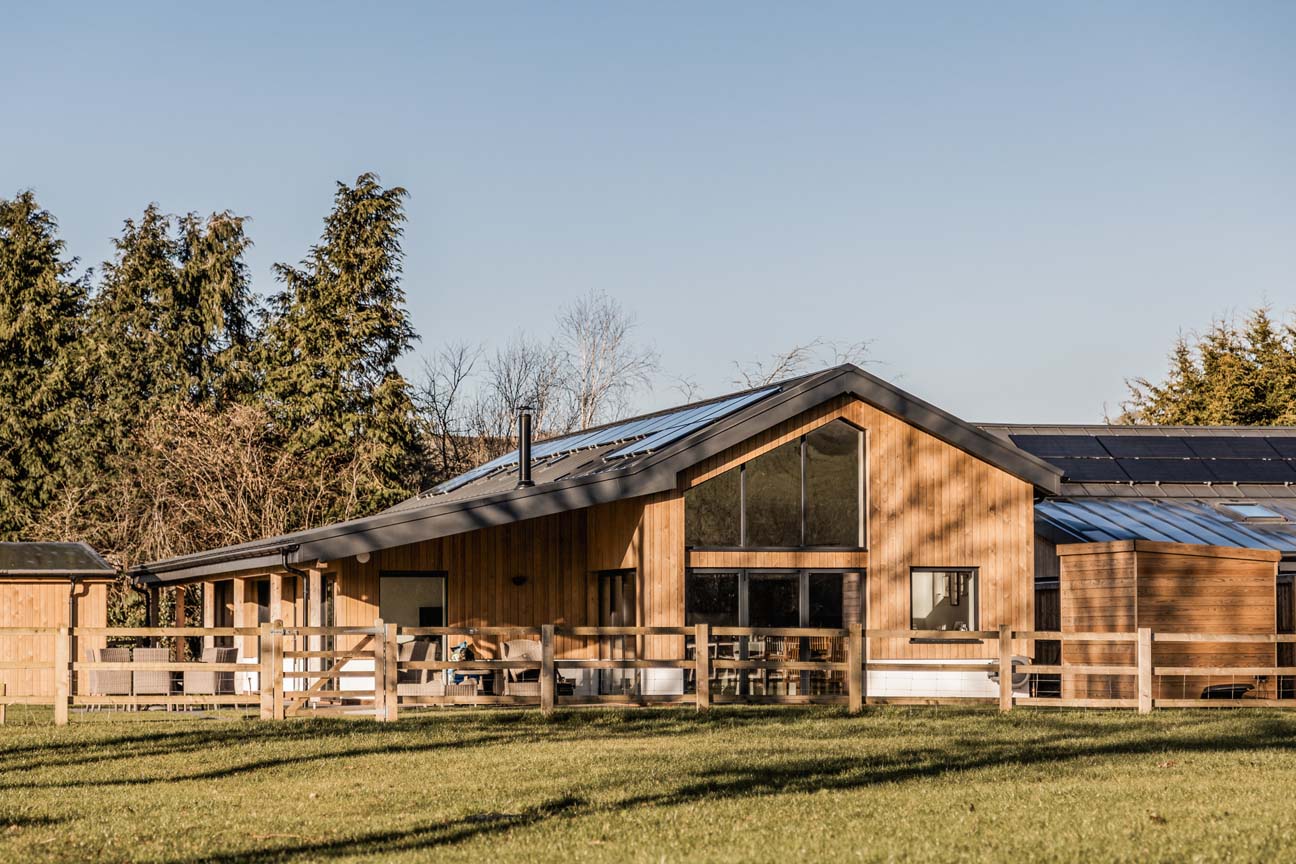
Class Q

Class Q is one of the most powerful planning tools available to landowners, farmers and rural developers in Devon. It allows you to convert certain agricultural buildings into homes without going through full planning permission, potentially unlocking hundreds of thousands in value.
But while Class Q is simpler than a full application, it’s not automatic.
Every year, we see landowners receive refusals that could have been avoided. Others miss opportunities completely due to poor advice or incorrect assumptions. At New Space Architecture, we believe in doing things properly. So in this article, we’re sharing the most common mistakes we see – and how you can avoid them.
The single biggest error is starting the process without confirming whether the barn is eligible in the first place. We’ve seen people pay for surveys, plans, and even start on site, only to find out their building fails on a technicality.
Book a free site visit and let us check for you. We’ll review the building’s structure, agricultural use history, location, and policy context before you spend a penny.
Just because a building looks like a barn doesn’t mean it qualifies under Class Q. It must have been part of an established agricultural unit, and used for agriculture before 20 March 2013.
We gather and review the necessary evidence: farm invoices, aerial photos, tenancy agreements or business records. If there’s any doubt, we’ll flag it early.
We understand the appeal of saving costs, but Class Q is a technical and tightly defined process. Local authorities will reject incomplete or poorly prepared applications — and they rarely give second chances.
Work with professionals who specialise in Class Q. We’ve submitted dozens of successful applications across Devon and know exactly what each council is looking for.
One of the key Class Q conditions is that the barn must be structurally capable of conversion. That means it can’t be a ruin or a pile of bricks. You need to show that the building can support a residential use with only modest reinforcement.
We always commission a structural survey from a qualified engineer as part of the submission. This provides clear, objective evidence that your building can be converted.
Even under Prior Approval, councils are required to consider ecological impacts. If your barn is home to bats, nesting birds or protected species, they can stop your application in its tracks.
We arrange preliminary ecology surveys if there’s any sign of risk. If further reports or mitigation are needed, we handle that too — quickly and cost-effectively.
Just because you can reach the barn doesn’t mean the access is acceptable under planning rules. Visibility splays, track width, and existing rights of way are all factors.
We assess access during the site visit. If necessary, we’ll provide swept path analysis or transport statements to support the application.
Many applications fail because the drawings don’t clearly show what is being proposed. Some are hand-sketched or too vague to pass scrutiny.
All our applications include professionally prepared architectural plans. These are clean, scaled, and precisely labelled – so there’s no confusion for the planning officer.
Some buildings have been used for storage or light industrial use rather than agriculture. Others are in excluded locations such as AONBs, National Parks or Conservation Areas — where Class Q does not apply.
We check the site constraints and land use history thoroughly. If Class Q isn’t available, we’ll advise on alternatives, including full planning or change of use under other permitted development rights.
Each site is different. Some need flood risk assessments. Others need contamination reports. Skipping these often results in refusal, or long delays while you gather them later.
We identify all required reports before submission and coordinate them for you. This ensures a clean, complete application from day one.
Some applicants submit Class Q schemes that scrape through planning but are hard to build, awkward to live in, or unattractive to buyers. These can cost more to convert and return less when sold.
We design with real-world use in mind. Whether you’re building for family, selling to developers or creating a holiday let, we make sure the layout, light and flow work, so the final product is desirable, liveable and valuable.
There’s a perception that Class Q is a box-ticking exercise. But councils do have discretion, especially around design, amenity, and local objections. A weak or poorly defended scheme can still be refused.
We don’t just tick boxes. We write strong planning statements, reference policy correctly, and present your case with clarity. We also stay in contact with planning officers throughout the process to keep things on track.
Refusals can usually be appealed, but they’re better avoided in the first place. If you’ve already had a refusal, we can review your application and resubmit a stronger version with the issues fixed.
In some cases, we’ll suggest switching to full planning instead, particularly if we can demonstrate Class Q as a fallback.
Class Q is an excellent opportunity – but like any opportunity, it can go wrong if not handled properly.
At New Space Architecture, we treat every application with the care it deserves. We assess eligibility in full, prepare a robust submission, and support you from start to finish. Most importantly, we give you honest advice based on experience, not guesswork.
When you’re dealing with your land, your legacy and your future, that’s what you need.

