

Class Q

The Class Q Process Explained: From First Conversation to Final Build
Common Mistakes Landowners Make with Class Q… And How to Avoid Them
How Much Value Could You Unlock With a Class Q Conversion?
Is My Barn Eligible for Class Q? A Definitive 2025 Guide for Devon Landowners
If you own an old barn or agricultural building in Devon, the chances are you’ve wondered whether it’s worth converting, or whether you’d be better off replacing it altogether.
Maybe the structure isn’t ideal. Maybe it’s falling apart. Or maybe you just have a vision that goes beyond what’s possible under Class Q permitted development.
At New Space Architecture, we’re regularly asked: “Can I just knock the barn down and build something new?”
The answer isn’t always straightforward, but it can be “yes”. In this article, we’ll explain the key differences between Class Q and full planning permission, when a replacement dwelling may be the better route, and how to strategically use Class Q as a stepping stone to get there. This guide is written for landowners, farmers, investors and developers looking to make the most of their land, while staying within the rules.
Class Q is a permitted development right. If your building qualifies and your proposal meets all the criteria, you don’t need full planning permission. You just need Prior Approval, which focuses on technical factors like access, flood risk, and structural soundness.
By contrast, a replacement dwelling requires a full planning application. This is assessed against local planning policies, design codes, and land use strategies – which often makes it more complex, but also more flexible in design and form.
There are many valid reasons a landowner might prefer to build new:
Some barns (particularly timber ones or those heavily weathered) are beyond repair. If the roof is gone, the walls are unstable, or the frame is collapsing, they may not qualify for Class Q.
In these cases, a rebuild through full planning may be the only realistic route.
Class Q limits you to the existing envelope of the barn (with a few minor exceptions like small rear extensions). If your ideal home doesn’t fit within that shape, a new build offers far more flexibility.
Although you can retrofit sustainability into a Class Q scheme, a new build allows you to start from scratch – with better insulation, heating systems, and layout.
Class Q typically requires you to retain the look and feel of the existing structure. If you’re after a different architectural style, materials or orientation, a replacement dwelling gives you creative control.
Not usually. Most councils (including those in Devon) won’t grant permission for a new house in the countryside unless it replaces an existing lawful dwelling or meets specific planning exceptions (such as Paragraph 84 of the NPPF for “exceptional quality” homes).
However, there is one powerful strategy that can unlock new builds: using Class Q as a fallback.
In planning law, a fallback position refers to a development that could be implemented without any further permission. If you already have Class Q approval, you are legally allowed to build that scheme.
Some councils will therefore accept a full planning application for a new dwelling in place of the Class Q scheme, on the basis that the fallback is already lawful. If your new design is considered an improvement (i.e. better design, better sustainability, better amenity), they may approve it.
This strategy is now well-tested and accepted across many rural authorities.
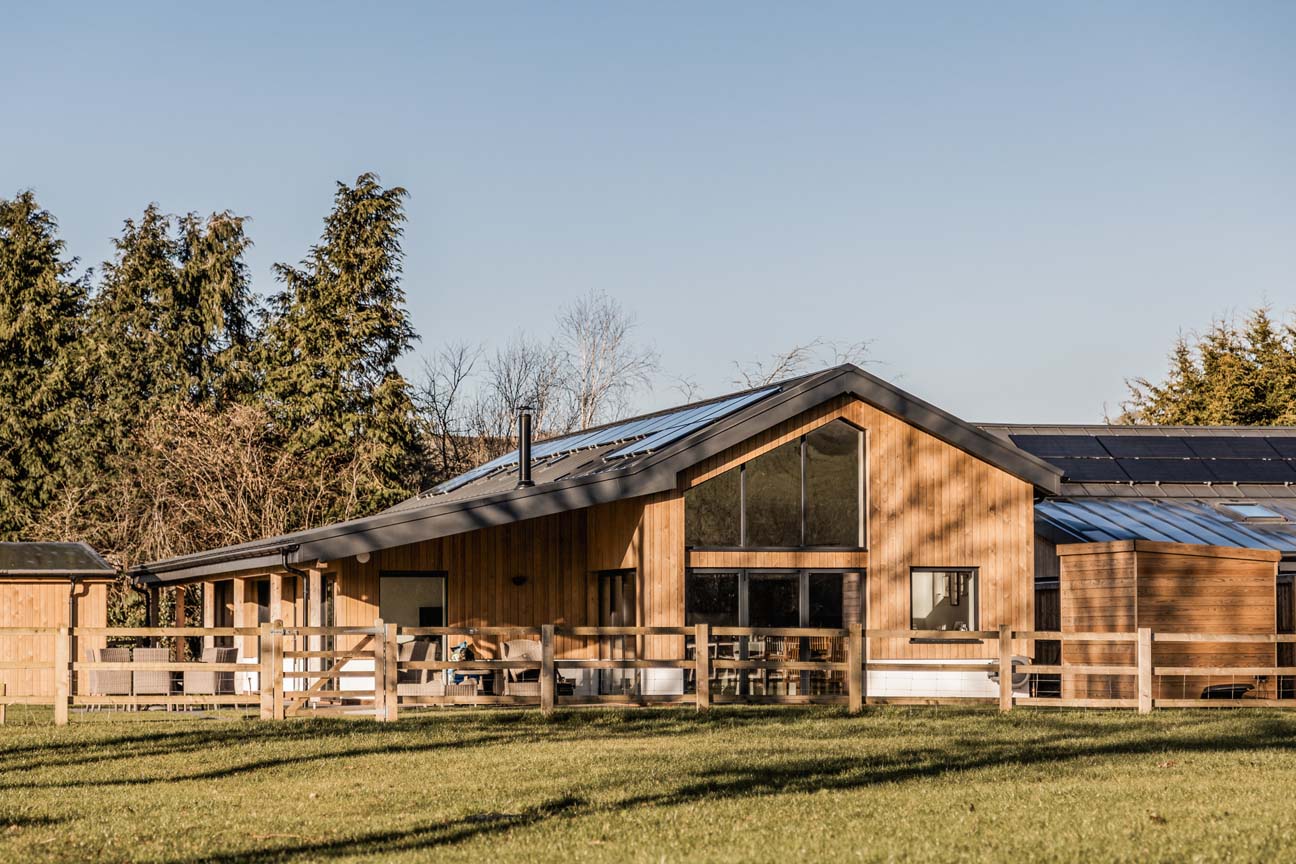
At Goodrest Farm, the landowner approached New Space Architecture with a steel-frame barn. It was eligible for Class Q, and we successfully secured Prior Approval for a three-bedroom dwelling.
However, rather than convert, the client decided to pursue a full planning application to replace the barn with a better-designed, more sustainable home.
Because we already had the Class Q fallback in place, the council accepted the logic. The full application was approved, and the client went on to build a brand new house in the countryside — one that would not have been permitted otherwise.
You can read the full case study here.
✅ Easier to secure (if criteria are met)
✅ Fast decision (typically 8 weeks)
✅ Lower planning risk
✅ Adds immediate land value
✅ Great for barns in solid condition
✅ Greater design flexibility
✅ Easier to build (start from scratch)
✅ Better long-term efficiency
✅ Allows more creative materials and form
✅ Can be tailored to market or lifestyle
❗️ Full planning can be refused on subjective grounds
❗️ Some areas have tight policies against new rural dwellings
❗️ Fallback only works if Class Q permission is secured first
You might consider applying for full planning permission if:
– Your barn is not structurally viable for conversion
– You want to increase floor area or change layout significantly
– Your design aspirations don’t suit the barn structure
– You’re working with a very small or awkward footprint
– You want to create a future-proofed, modern home with full control
If your building is ineligible for Class Q (e.g. in an AONB or Conservation Area), replacement may also be your only route – though the policy bar will be higher.
We’ll inspect your building and tell you, honestly, whether Class Q or full planning is your best bet.
Even for fallback, you’ll need to show your building was in agricultural use before 20 March 2013.
Is your aim to live on-site, sell the plot, or create a legacy asset? The answer will shape your route.
Class Q can be faster and cheaper to build, but full planning may unlock better long-term outcomes.
Can I demolish the barn and still use Class Q?
No. Class Q requires the existing structure to remain. Demolition and rebuild is a separate planning process.
Is Class Q fallback always accepted by councils?
No. It depends on the site and the quality of the replacement scheme. We’ve had strong success in Devon, but each case must be carefully argued.
Can I apply for Class Q and full planning at the same time?
Yes. In fact, we often do — Class Q for the fallback, and full planning for the preferred design.
What if my barn isn’t eligible for either route?
There may be other options, including rural worker dwellings or conversion to commercial use. We’ll help you explore them.
Deciding between converting a barn or replacing it with something new isn’t just a planning question. It’s about what you want the outcome to be – and what your building, budget and site can support.
At New Space Architecture, we don’t just push one route over another. We help you make the right call, then design a solution that gets you there with minimal risk and maximum value.
Whether you choose Class Q or full planning, you’ll be in safe hands.

